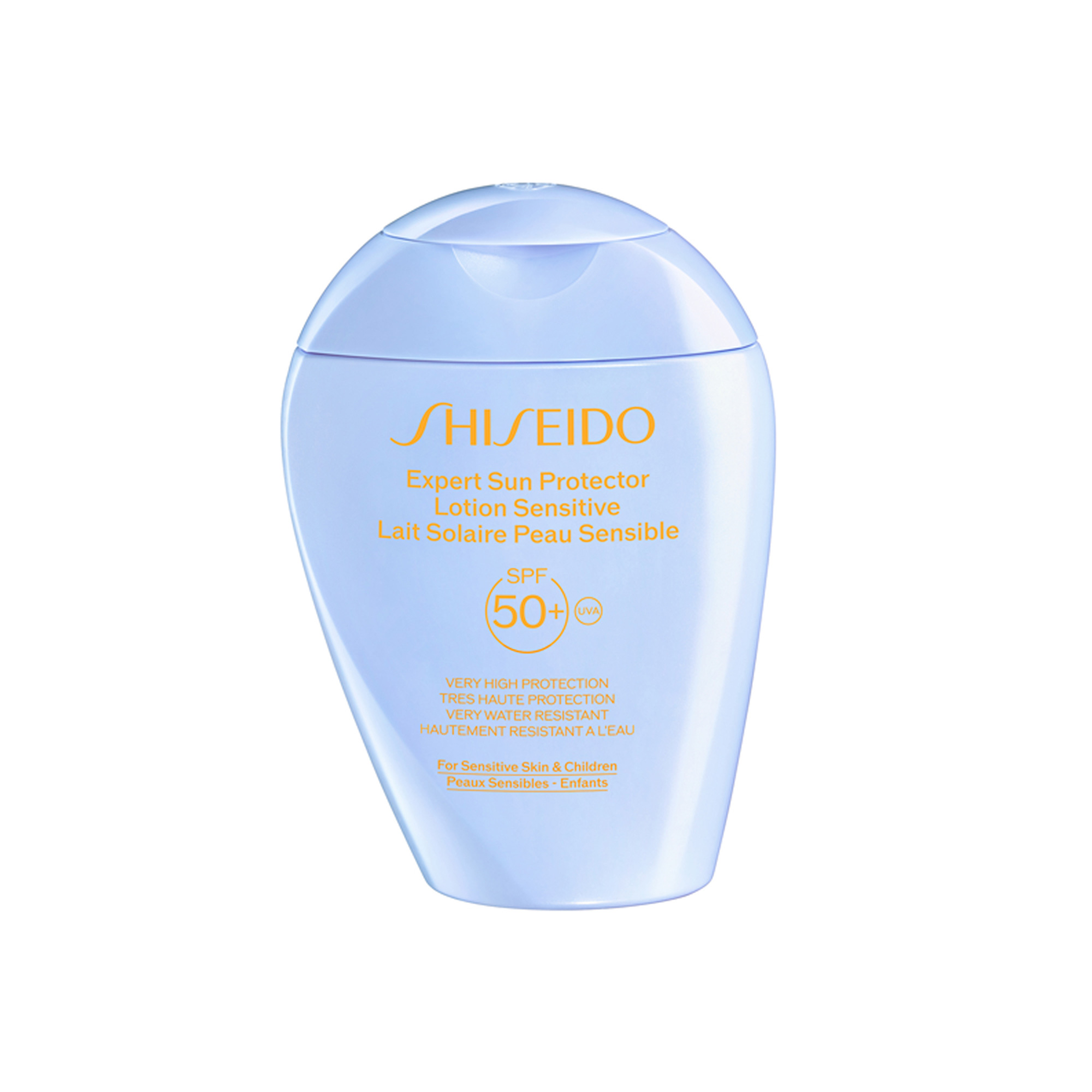
The SPF (or sun protection factor) rating doesn’t tell you how strong your face sunscreen is; all Shiseido suncare offers the same level of broad-spectrum UVA and UVB protection. Instead, the number indicates how long you can be in the sun before you start to burn. For example, an SPF of 10 means you can stay in the sun 10 times longer than usual before there’s a risk of burning. The higher the SPF you wear, the longer-lasting your protection will be. But, even with SPF50, we always recommend reapplication throughout the day.
When we talk about broad-spectrum sunscreen, we’re referring to SPF that protects your skin from UVA and UVB rays, providing equal amounts of shielding against both. UVA rays affect the skin’s deeper layers, which can lead to dark spots, fine lines and wrinkles, while UVB rays cause damage on the surface, and are responsible for burning. By warding off both types of rays, you can maintain healthier, more youthful-looking skin.
When we talk about broad-spectrum sunscreen, we’re referring to SPF that protects your skin from UVA and UVB rays, providing equal amounts of shielding against both. UVA rays affect the skin’s deeper layers, which can lead to dark spots, fine lines and wrinkles, while UVB rays cause damage on the surface, and are responsible for burning. By warding off both types of rays, you can maintain healthier, more youthful-looking skin.
To cover your whole face, use at least one-quarter of a teaspoon of sunscreen. Make sure you massage it into the hairline, over the ears and into any small crevices, like the creases around your nose.
It is. In fact, our Sun Expert range is anti-ageing in two ways. First, the hard-wearing protection of our face and body sunscreens helps to protect your skin from UV-induced ageing, such as lines, sagging and hyperpigmentation. Plus, the PROFENCE CEL™ botanical blend prevents inflammation and deeply hydrates your skin, while Safflower Extract supports collagen production for a more youthful-looking complexion.
Once opened, most sunscreens will remain effective for up to three years, so you can keep your skin protected from season to season. But, if you’re using it properly – meaning every day, even through winter, on your face and body – you won’t need this long. Remember: even when it’s cloudy or cold outside, face SPF is essential.
It depends on the face sunscreen you’re using. If you’re applying a chemical SPF, you can layer it underneath your moisturiser and even your serum, so it’s the first product that touches freshly cleansed skin. This allows it to absorb into pores for high protection. But if you’re using a physical sunscreen (also known as a mineral sunscreen), you may prefer to apply it after moisturiser, so it creates a veil of protection over the top of your skincare. This makes reapplication easier, too.
As long as it’s under 100ml, you can take your face sunscreen in your hand luggage – ideal for when you’re packing light or topping up at your next destination. And inside your checked luggage, you can carry as much sunscreen as you want, in any size bottle. If you’re heading somewhere hot, don’t forget to pack after sun for end-of-day care.